Rice and Gratitude: What Is Naikan, the Japanese Practice of Self-Reflection?
Sep 10, 2026
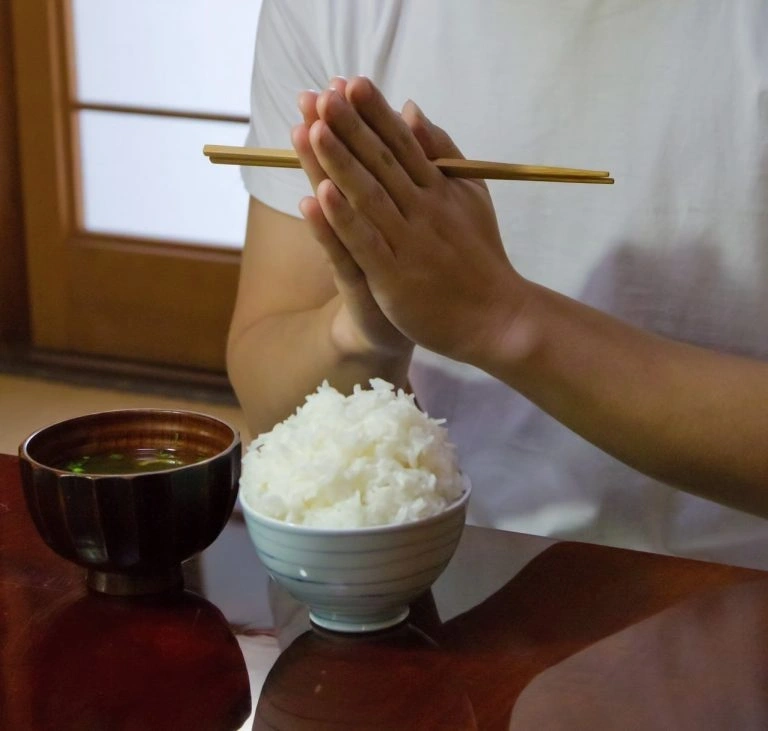
Zen Master Thich Nhat Hanh wrote of looking into his bowl of rice and seeing that “this food is the gift of the earth and the sky.” When we look carefully, we may begin to see much more than food.
We can imagine the rice field, the soil, the rain and sunlight, the people who planted and harvested the crop, those who transported it, and the person who prepared the meal. A simple bowl of rice reflects an interconnected web of labour, nature, care, and support.
This reminds me of my early childhood in Japan. I was taught to appreciate rice and never waste even a single grain, as doing so would be disrespectful to the farmer who had worked to produce it. Although this teaching sometimes felt rather strict, it helped cultivate in me a sense of gratitude and connection with the wider community and the natural world.
What is gratitude?
Gratitude is more than telling ourselves to be positive. It involves noticing and appreciating what we have received: care, effort, kindness, opportunities, nourishment, protection, and the many forms of support that can easily go unnoticed.
Some studies suggest that gratitude practices may support wellbeing, mood, and, for some people, sleep quality, although the effects tend to be modest and findings are mixed. Gratitude also does not require us to deny pain, injustice, disappointment, or trauma. We can recognise what has supported us while acknowledging what has harmed or challenged us.
One way of cultivating this kind of gratitude is the Japanese practice of Naikan.
What is Naikan?
Naikan is a structured practice of self-reflection developed in Japan in the mid-20th century by Ishin Yoshimoto. The word can be translated as “looking within” or “inner observation.” It was influenced by Japanese Buddhist traditions and later adapted into a form of reflective therapy and personal development.
Traditionally, Naikan is practised as an intensive retreat of about a week, with long periods of structured reflection and brief check-ins with a guide. This post describes a gentler, everyday adaptation. Research on Naikan itself is more limited than research on gratitude in general.
Naikan invites us to examine our relationships through three questions:
1. What have I received from this person?
2. What have I given to this person?
3. What troubles or difficulties have I caused this person?
The questions are simple, but reflecting on them carefully can reveal parts of our relationships we have overlooked.
What have I received?
Our attention naturally tends to notice what is missing, disappointing, or difficult. The first question directs it towards what we have been given, from significant acts of love or care to everyday support:
• a meal prepared for us
• a message from a friend
• someone listening when we were distressed
• the work of people who maintain the places and systems we use
Reflecting on what we have received does not mean a relationship was perfect. It simply helps us see a fuller picture.
What have I given?
The second question asks what we have contributed. It is not an invitation to treat relationships as transactions or to compare who has given more. We can simply notice how we have taken part in the lives of others through our time, care, effort, and kindness.
We can also notice that our ability to give is supported by others: the train driver who helps us arrive, the cleaner who maintains our workplace, the person who cared for our children while we worked. Even what we give is rarely achieved entirely alone.
What troubles have I caused?
The third question is often the most challenging. We are usually very aware of the inconvenience or hurt caused by others, and less aware of the difficulties we unintentionally create. We might ask:
• Have I kept someone waiting?
• Have I spoken without fully listening?
• Have I been impatient or dismissive?
• Have I taken another person’s effort for granted?
We may feel irritated when someone talks loudly on their phone in public, while overlooking times we have done something similar. This reflection is not meant to produce shame or harsh self-criticism. Its purpose is greater awareness, responsibility, and consideration for others, and, where appropriate, to encourage us to apologise, repair harm, or act differently.
Practising daily Naikan
Naikan can be used to reflect on a relationship with a parent, partner, friend, colleague, teacher, pet, or even an object that supports daily life, over a chosen period such as childhood or the past year. A gentler daily practice is to reflect on the previous 24 hours, perhaps before bed:
• What did I receive today?
• What did I give today?
• What troubles or inconvenience did I cause today?
It helps to identify concrete events rather than general conclusions, for example: “My colleague made time to answer my question.” “I prepared dinner for my household.” “I replied impatiently when someone interrupted me.” Specific observations keep the practice grounded rather than abstract or judgmental.
A trauma-informed approach to Naikan
Naikan needs care, particularly for people with histories of trauma, abuse, coercion, or excessive responsibility for other people’s emotions. Some people have learned to minimise what was done to them while taking too much responsibility for the behaviour of others. For them, the third question may intensify shame or self-blame.
Naikan should never be used to justify abuse, overlook harmful behaviour, or suggest that a person is responsible for being mistreated. A trauma-informed practice maintains balance:
• We can recognise what we received without denying what was absent.
• We can acknowledge our contribution without believing we must constantly earn care.
• We can accept responsibility for our actions without taking responsibility for another person’s harmful choices.
• We can practise gratitude while still maintaining boundaries.
If a relationship feels unsafe or overwhelming, begin with a more neutral subject, such as a friend, teacher, pet, meal, or workplace. Naikan is not a substitute for treatment. If you have a trauma history or are experiencing significant distress, it may help to explore it with a qualified professional, and to pause and seek support if the practice increases your distress.
Seeing ourselves within a wider world
Naikan can help us recognise how deeply our lives are supported by other people, living beings, natural systems, and forms of labour that are often invisible to us. It can also challenge entitlement and help us see ourselves not as isolated individuals but as participants in a wider network of giving and receiving.
Like looking carefully into a bowl of rice, Naikan invites us to pause and notice what is already present. Through this reflection, gratitude can become more than an idea. It can become a way of seeing our relationships, our responsibilities, and our place in the interconnected world around us.
If you would like to explore whether therapy could support you, you are welcome to get in touch with Wisdom Psychotherapy in Brunswick, Melbourne, to arrange an initial conversation.